Introducing PATCH

The Future of Tactical Connectivity

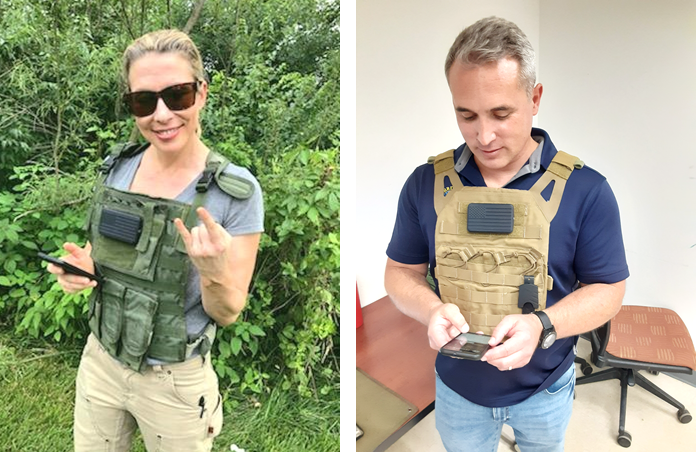
PATCH is a waterproof wearable that provides off-grid connectivity for tactical teams.

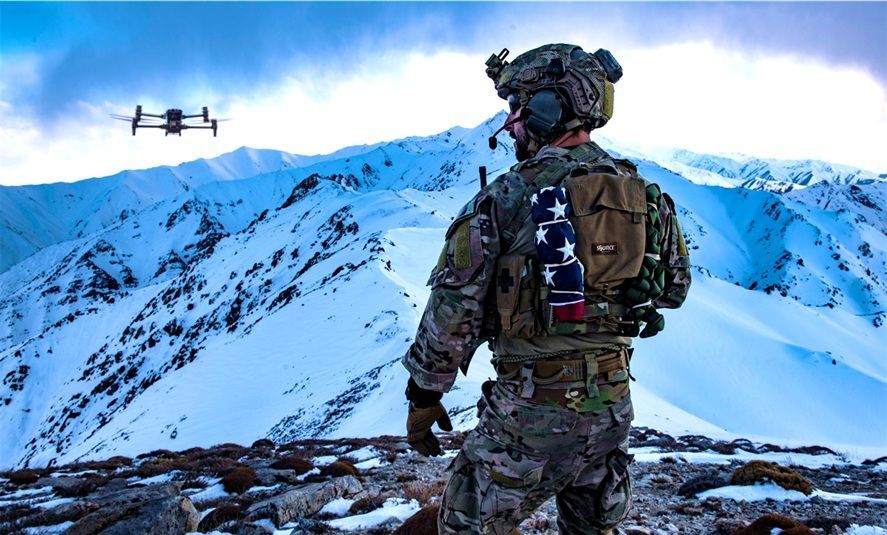
It creates an encrypted, zero-infrastructure network for situational awareness and messaging when cellular, Wi-Fi, satellite, or conventional radio systems are unavailable or inappropriate.

PATCH can operate as a stand-alone tracking device or be paired with a smartphone to support team monitoring, messaging, and ATAK-based workflows.

Off-Grid Texting, Activity Monitoring, Location Tracker & GPS with End-to-End Encryption

Designed and built in the United States by a team with deep experience in supporting military and first responder operations.


Why PATCH Works

No Infrastructure Required

PATCH devices mesh directly with each other to provide quiet, resilient connectivity when cellular, Wi-Fi, satellite, or legacy radio systems are unavailable or inappropriate.

Secure & Encrypted Communications

PATCH uses AES-256 encryption to protect data in transit. There's no session data stored on the PATCH device.

Maintain Team Awareness

PATCH automatically monitors location and activity across the network, so you can keep tabs on your team, even if they can't message you.

Designed & Built in the USA

PATCH is designed and manufactured in the United States, enabling tighter quality control and supply-chain assurance.


How PATCH Is Designed, Built, and Secured
January 15, 2026
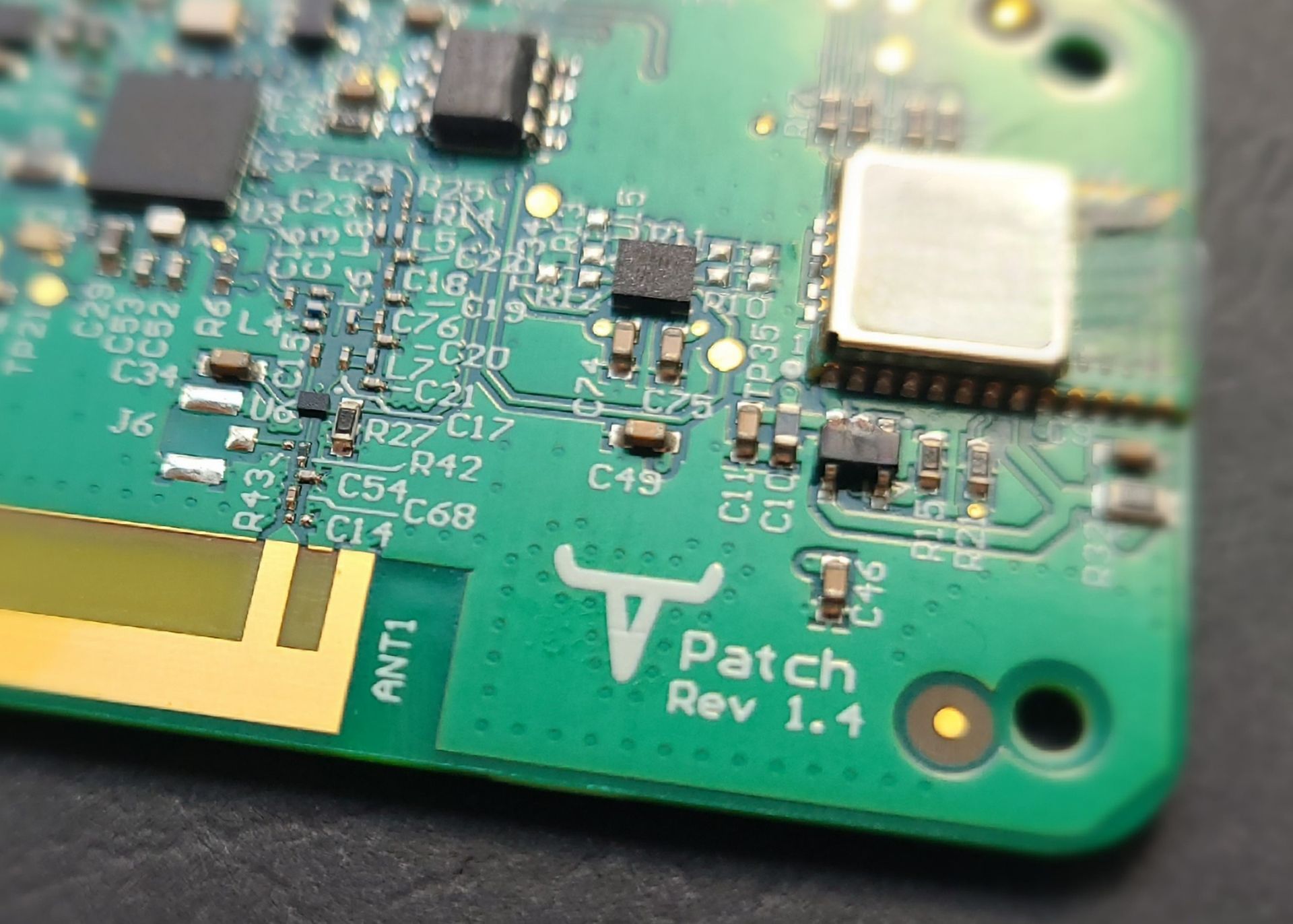
Security Is More Than Encryption There is a common and risky assumption in modern product development: "We use AES-256, so the device is secure." Encryption matters, but encryption only protects data in transit. It does not address compromised firmware, untrusted silicon, or supply chains you don't control. Across defense and commercial markets, products are routinely marketed as "secure" even when the companies behind them do not write their own firmware, do not control manufacturing, and do not fully understand what their hardware is doing at the chip level. This gap is not theoretical—it's where modern vulnerabilities live. In contemporary conflict and competition, compromise does not always arrive loudly. Sometimes it is kinetic, and sometimes it is silent—embedded in firmware, introduced through a component substitution, or hidden behind an undocumented interface that was never audited. Once deployed, those weaknesses propagate downstream, inserted directly into operational systems. Security, in this context, is not a feature, it's a system property. Engineered for Trust Under Constraint PATCH is designed with the assumption that it will be deployed in environments where infrastructure cannot be trusted and scrutiny is guaranteed. That assumption drives design across the entire system. Roper is the original equipment manufacturer (OEM) for PATCH. Circuit board design, fabrication, programming, and device assembly occur in the United States under our direct oversight. All firmware and software, including the PATCH mobile application, are developed and maintained by our team of U.S. citizens. PATCH is fully NDAA-compliant. The system is intentionally designed with a reduced attack surface: No Internet connectivity or IP-based networking No operating system (bare-metal firmware) No open-source code No physical ports or external interfaces PATCH is designed with no persistent data storage. Location, activity, and message data are not stored on the device. PATCH uses our SnapMesh™ protocol, which ensures that encryption keys and network configuration data exist only for the duration of an active session and are wiped when the network is shut down or when a device loses power. Data transmitted over SnapMesh is encrypted using AES-256 with a one-time-use key generated at network initialization. Communications between PATCH and a paired smartphone use Bluetooth Low Energy (BLE) Secure Connections with AES-128 encryption and ECDH key exchange (P-256), along with privacy measures to limit device tracking and correlation. PATCH also monitors network integrity in real time. Replay attacks are detected and blocked, with users notified if an attack is detected while maintaining network operation. PATCH has been independently tested in the field to be resistant to jamming outside 277 yards. Why This Matters When hardware, firmware, manufacturing, and supply chain are treated as separate problems, weaknesses accumulate quietly. When they are designed together, security becomes a property of the system, not a claim. That is the difference between security as a feature and security as an outcome.
PATCH inventors, Dana De Coster and Maeve Garigan
By Roper Team January 15, 2024
PATCH was developed to address a real operational gap: maintaining situational awareness and secure communication for teams operating without reliable infrastructure. The inventors, Maeve Garigan and Dana De Coster , first worked together in 2015 while supporting US Special Operations units. At the time, Maeve was deploying new technologies with operational teams, and Dana was serving as an Operations Officer overseeing West Coast SEAL elements. Their early collaboration included the deployment of backpackable reconnaissance drones, combining operational need with rapid technical execution. That experience highlighted a recurring problem: teams lacked a reliable way to maintain awareness of friendly forces and communicate securely when cellular, Wi-Fi, satellites, or legacy radio systems were unavailable or inappropriate. PATCH was initially conceived as a wearable tracking device designed to be lightweight, rugged, and easy to use in the field. The form factor was intentionally a patch-style wearable, integrating seamlessly into existing uniforms and equipment rather than adding another device to manage. As the concept matured, it became clear that tracking alone was insufficient. Operational feedback pointed to the need for secure, off-grid communication at the tactical level. The system was expanded to support encrypted messaging and data exchange over a self-forming mesh network, independent of external infrastructure. PATCH pairs with a mobile application that provides a user interface for messaging, location sharing, and status awareness. Communications are protected using AES-256 encryption, and the system is designed without persistent data storage. Encryption keys are generated at network initialization and are discarded when the network session ends. Location, activity, and message data are not stored on the PATCH device, reducing residual data exposure in the event of device loss. The first PATCH prototype was designed and built in six weeks for an invite-only military technology demonstration in June 2021. That early prototype demonstrated the core concept: secure, infrastructure-independent situational awareness and communication in a wearable form factor. PATCH continues to evolve based on real operational requirements, with a focus on reliability, security, and usability under constraint.
By Roper Team December 9, 2023
PATCH is designed and manufactured in the United States under Roper’s direct control, including hardware design, firmware development, manufacturing oversight, and final assembly. The system is fully NDAA compliant, with a supply chain designed to avoid opaque sourcing, undocumented substitutions, and fragile dependencies. For systems intended for operational use—where availability and trust matter as much as performance—control over hardware, firmware, manufacturing, and supply chain is a risk-management decision, not a branding choice. This approach supports sustained production and confidence in the integrity of both hardware and software.

Contact Team PATCH

PATCH is available for purchase by qualified government organizations. Contact us to confirm eligibility.


PATCH News


PATCH Patents

 U.S. and Foreign Patents Pending
U.S. Design Patent D1019592
International Design Reg. No. DM/217 510
Australian Design Reg. Nos. 202117020, 20211721, 20211722, 20211723, and 20211724
Canadian Design Reg. No. 208644, 208645, 208646, 208647, an
d 208648

Copyright 2026,, Roper Solutions, Inc.